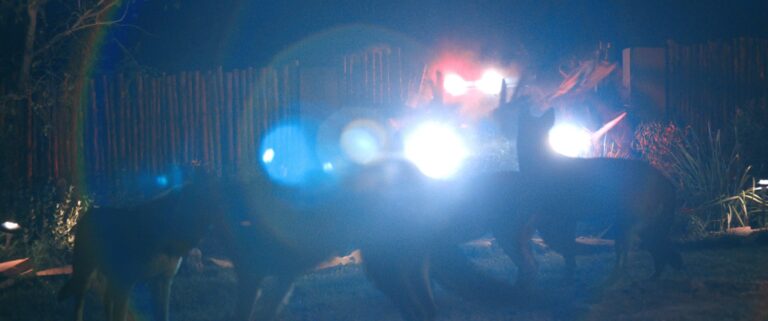
With “The Gap,” Pluribus reaches a brutal turning point. The seventh episode of Vince Gilligan’s Apple TV sci‑fi drama slows the plot almost to a standstill, then uses that pause to push its two key resistors, Carol Sturka and Manousos Oviedo, to their physical and emotional limits.
Written by Jenn Carroll and directed by Adam Bernstein, the episode arrived on December 12, 2025, as part of Pluribus’ first season on Apple TV. Guidance from outlets like Dexerto pegged the drop at 6 p.m. PT / 9 p.m. ET that evening, in line with Apple’s habit of early‑evening releases. However, some earlier schedule pieces described Episode 7 as effectively appearing on Thursday night in parts of the Americas, which created minor confusion around the release date.
Whatever timestamp viewers saw, the episode landed at a moment when Pluribus had already become Apple TV’s most‑watched series ever, a milestone trade sites and Apple‑watching outlets reported on the same day the episode became available. That context matters. “The Gap” is not a niche experiment hidden in the back half of a cult show. It is a risk‑taking hour at the heart of Apple’s biggest drama.
Where Episode 7 Fits in Pluribus’ Story
For anyone catching up, Pluribus imagines an alien virus that triggers “the Joining,” a global event that folds almost all of humanity into a contented hive mind called the Others. A tiny handful of people prove immune. Among them is Carol Sturka, played by Rhea Seehorn, a writer in Albuquerque who becomes both a symbol of resistance and a pawn in the hive’s attempts to understand individuality.
By the time Season 1 reaches Episode 7, Carol has:
- Survived the chaos of the Joining in New Mexico.
- Learned she is one of only 13 immunes left alive.
- Watched other “Old‑Schoolers” make compromises she cannot accept.
- Left Albuquerque for Las Vegas in search of answers, then returned bearing fresh disillusionment about both the Others and her fellow survivors.
At the same time, Manousos Oviedo, played by Carlos‑Manuel Vesga, has emerged from hiding in Paraguay. Earlier episodes revealed that he remained undiscovered by the hive for 33 hours, survived nine days in a storage unit eating dog food, and eventually made contact with Carol. Critics and interviewers have increasingly treated him as a kind of moral yardstick, someone who defines himself entirely against the hive.
Episode 7, titled “The Gap,” splits its running time between these two figures. On paper, very little “happens.” In practice, as several critics noted, nearly everything changes.
Carol Alone in Albuquerque
The episode opens not in Albuquerque, but on a deserted gas station along the road back from Las Vegas. Carol pulls in, finds the power dead, and reaches for the only force that can still make the world move. She calls the Others.
They turn on the pump. She then orders a very specific indulgence: an “ice‑cold red Gatorade.” A drone dutifully drops a bottle that is only partially chilled. Carol calls back to complain and pointedly tells the hive to “do better.” That exchange, pulled straight from the episode’s synopsis and plot summaries, sets the tone for what follows. Carol despises the Others, but she still leans on their power for every convenience.
She raids the market for fireworks and lottery tickets, then drives home to a silent Albuquerque. On‑screen timers, documented by fans and recap sites, place these early scenes at roughly 12 days and 20 hours after the Joining. In those first weeks, according to AwardsWatch’s interview with Seehorn, Carol’s isolation is still “performative,” full of stunts and noise.
Back in her cul‑de‑sac, Carol turns the abandoned suburb into a private amusement park. She stacks fireworks in the street and lets them scream into the sky. She howls along with distant wolves. She even takes over the Albuquerque Country Club, blasting golf balls off the fairway into surrounding buildings. Production reports note that the club allowed the crew to let a section of the course overgrow for weeks to match the show’s post‑apocalyptic look.
The series then sends Carol out to the Jemez Springs area. She floats in hot springs, singing loudly to no one. She visits a set version of the Georgia O’Keeffe Museum, steals a painting, then replaces the Bella Donna poster hanging in her house with the real artwork. The Others, for now, simply accommodate these whims.
At the same time, they try to meet her emotional needs. Carol finds herself at a carefully recreated anniversary dinner she once shared with her wife, Helen. Each dish corresponds to a specific year of their relationship. As recaps describe it, Carol begrudgingly acknowledges that the Others “can really cook,” even while she remains furious at their existence.
Yet as the on‑screen timer begins to jump forward, the energy drains. By the episode’s second half, the clock has moved to 48 days and 16 hours after the Joining. Over a month has passed since Carol has spoken to another unJoined person. AwardsWatch writes that the “weight of her loneliness [is] crushing her” by this point.
The episode finds its starkest image of that loneliness in a fireworks misfire. Carol sets up a mortar tube in the street; the tube tips and points directly at her. Instead of stepping away, she simply closes her eyes and stands there. The rocket screams past her head and slams into a neighbor’s house, starting a fire. She calmly walks over and hoses it down.
In an interview, writer‑producer Jenn Carroll said the team did not frame this as a full suicide attempt. Instead, she described Carol’s mindset as “I don’t really care one way or the other,” a point where defiance and despair become almost indistinguishable.
Seehorn, in her own interview with AwardsWatch, put it more bluntly:
“[It was] an existential isolation where you have no idea if this will ever end, and that it broke her. It really broke her.”
Eventually, Carol can no longer tolerate even principled solitude. She paints “COME BACK” in huge white letters across the asphalt of her cul‑de‑sac. According to production coverage, that message was visible for months in satellite imagery, briefly serving as an unintentional spoiler for attentive fans.
Soon after, Zosia (played by Karolina Wydra), a representative of the Others with whom Carol has built a complex, quasi‑romantic connection, arrives by car. Carol runs to her and collapses in a wordless embrace. Seehorn has said that she originally tried playing the scene more contained, but Vince Gilligan and Adam Bernstein encouraged her to let Carol fully break. Critics such as Vulture’s Scott Tobias later cited this moment as the one that makes Carol “achingly human.”
Manousos and the Real Darién Gap
While Carol spins in place in New Mexico, Manousos Oviedo heads north from Paraguay on a mission with a simple declaration. On cassette‑tape English lessons, he repeats:
“My name is Manousos Oviedo. I am not one of them. I wish to save the world.”
That phrase, highlighted in Decider’s character coverage, functions as both language practice and prayer. As he drives, he siphons fuel from abandoned cars and leaves cash behind. He turns down food and water offered by Joined people, even when they seem genuinely kind.
Carlos‑Manuel Vesga has been clear about why. In his interviews, summarized in both English‑ and Spanish‑language coverage, he explains that for Manousos, everything the Others can offer “reminds him of loss, of what they took.” In a quote carried via Wikipedia, Vesga says:
“Everything that they can offer to him reminds him of loss, of what they took… This guy is like, ‘No. Nothing… I’d rather eat dog food.’”
His journey brings him to the edge of the Darién Gap, the notoriously dangerous stretch of jungle between Colombia and Panama. There, a small group of Others appears and tries to bargain. They warn him about the heat, disease, snakes, spiders, and particularly the chunga palms, whose spines carry dangerous bacteria. They also offer a simple solution: they will teleport him and his beloved car directly to Carol in New Mexico.
Manousos refuses. He tells them that “nothing on this planet is yours,” arguing that they own nothing because everything they have is stolen. Then he sets his car on fire and walks into the jungle.
The rest of his storyline is a survival ordeal. He slips, falls onto a chunga palm, and is impaled by its long spines. The episode shows him heating his machete red‑hot and pressing it into the wounds to cauterize them. He staggers on, feverish, until his body gives out.
Carroll has noted that the production gave composer Dave Porter almost no room for score in “The Gap.” According to her interview, the episode uses just one musical cue that is not a licensed song: the moment when Manousos collapses in the jungle. Everything else relies on environment and diegetic sound.
As he lies there, a helicopter bearing the mark of the hive appears overhead. A medic descends. The episode cuts away before resolving whether Manousos lives, dies, or is forced into some compromise he would have rejected on his feet.
Vesga has said that, for the character, the sight of that helicopter represents a kind of defeat. Even if they save his life, the Others have “won” by placing him once again in their debt.
How “The Gap” Was Built
Although the episode feels intimate, it is not small. Multiple industry reports peg Pluribus at around $15 million per episode, placing it among television’s most expensive dramas. Those figures, reported by Rolling Stone and repeated by outlets including Forbes and Flickonclick, do not break costs down by hour. Yet “The Gap” clearly uses significant resources in its location work.
The Albuquerque Country Club and an in‑universe Georgia O’Keeffe Museum stand‑in anchor Carol’s half of the story. Production shot her wilderness sequences in the Jemez Mountains around Jemez Springs. For Manousos’s portion, the team traveled to La Palma in Spain’s Canary Islands, using its rugged terrain to approximate the South American jungle and the Darién Gap.
Carroll, a longtime member of Gilligan’s production team, wrote “The Gap” as her first credited television script. Bernstein, with extensive experience on Breaking Bad and Better Call Saul, handled the direction. Editor Chris McCaleb and cinematographer Paul Donachie rounded out the core creative team.
In interviews, Carroll and others have described the episode as a formal challenge. Dialogue is sparse. Music cues, aside from Porter’s single piece, come from songs Carol plays or sings, including R.E.M.’s “It’s the End of the World as We Know It.” The split‑screen story has to sell two very different ordeals: Carol’s psychological breakdown in a comfortable environment, and Manousos’s physical degradation in the wilderness.
Critic Noel Murray at The A.V. Club argued that Carroll, Bernstein, and the crew “adeptly handled a difficult challenge,” praising the episode’s control. Several reviewers compared Manousos’s jungle trek to punishing cinematic journeys like Deliverance or The Revenant, while noting that Carol’s cul‑de‑sac meltdown is at least as harrowing.
Reception: A Bold Hour at the Peak of Popularity
By the time “The Gap” aired, Pluribus had already achieved an unusual combination: high ratings, strong reviews, and awards momentum. The series holds a 98% critics’ score on Rotten Tomatoes and a Metacritic score of 87, labeled a “Must‑Watch.” It has been named one of the AFI Top 10 Programs of the Year and nominated for Best Drama Series at both the Golden Globes and Critics’ Choice Awards, with Rhea Seehorn earning matching Best Actress nominations.
Episode‑specific scores underline how well “The Gap” landed with critics:
- IGN: 8/10, labeled “great.”
- The A.V. Club: Grade A.
- Vulture: 5/5 stars.
- Pop Culture Maniacs: 5/5.
- Ready Steady Cut: 4.5/5.
- TV Fanatic: 3.75/5.
Rotten Tomatoes aggregates largely glowing write‑ups, while the Metacritic user page for the episode sits at a more modest 5.7/10 based on a small number of user ratings. That mild gap reflects a broader pattern: Pluribus’s critical scores sit well above its more divided audience response.
Still, major outlets have singled out Episode 7 as one of the year’s standout television hours. Decider called it “one of the year’s boldest and most spellbinding TV episodes,” emphasizing its reliance on sound and visual storytelling. Esquire framed it as the “point of no return” for Carol, while multiple critics highlighted Manousos as a breakout character after “The Gap.”
What Happens Next
Because Apple ordered Pluribus with a two‑season commitment, Episode 7 unfolds with the confidence that there is more story coming. Forbes has reported that Season 2 is expected to arrive no earlier than late 2027 or early 2028, given the show’s scale and already tight production pipeline. That long runway makes “The Gap” feel less like a climax and more like a hinge.
Within Season 1’s nine‑episode structure, “The Gap” occupies a crucial late‑middle slot. It follows the horrors of Episode 6’s revelations about what the Others are doing with human remains and precedes the endgame in Episodes 8 and 9. In between those plot‑heavy hours, Carroll and Bernstein use Episode 7 to ask a simpler question: what do resistance and integrity look like when no one is watching?
The episode does not provide a tidy answer. Instead, it leaves viewers with two indelible images: Carol, broken, clinging to Zosia in a suburban street, and Manousos, facedown in the jungle as the hive’s helicopter descends.
Both scenes, grounded in the facts of the episode and supported by the words of the people who made it, will shape whatever comes next for Pluribus’ embattled immunes.