

Abandonment and Aftershocks: The Quiet Fallout
You wouldn’t peg Pluribus as the show to serve up a bottle episode right in the middle of Thanksgiving week, but here we are. Episode 5 — fittingly titled “Got Milk”—threw its very own curveball the moment it premiered on November 26, 2025, dropping early on Apple TV+ (en.wikipedia.org). It’s all Carol, all alone, and everything feels lopsided and weirdly hollow — on purpose.
The episode grabs us right where “Please, Carol” left off. Carol, freshly accused and more isolated than ever, wakes up in a hospital bed. Zosia, whose life she nearly sabotaged, made it through, but now the hive wants nothing to do with Carol’s brand of truth-seeking chaos. Her attempts to contact anyone hit a giant wall of politeness in the form of a pre-recorded phone message voiced by the ever-slick Patrick Fabian (decider.com). He’s not here as Howard Hamlin. Here, he’s the first layer of the hive’s velvet-gloved rejection.
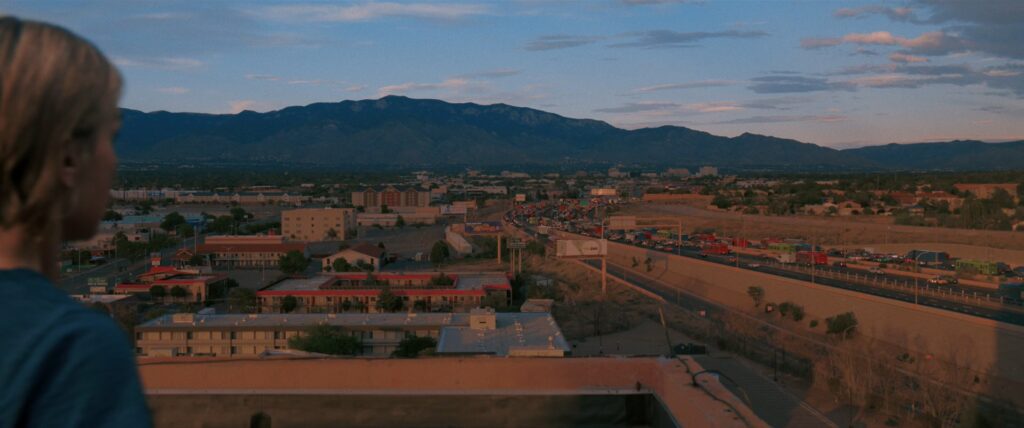
What’s more brutal than rage? Indifference, apparently. The Others, in a mass caravan, have physically and emotionally evacuated from Carol’s Albuquerque. She stands at the edge of a rooftop and sees nothing but a stream of taillights and a city suddenly stripped of noise, community, and care (primetimer.com).
With every comfort and annoyance once provided by the hive now gone (or on unnatural pause), Carol faces life in a vacuum. It’s one thing to crave silence, another to choke on it.
Life on the Outside: Carol vs. Civilization’s Skeleton
Initially, Carol seems to relish the forced solitude. No reminders from buzzing voices, no smothering presence of the ever-cheerful Others, no smug Zosia. But her new reality falls apart at the seams almost instantly.
Let’s break down a few hard-hitting realities:
- Utility grid? Flickering.
- Trash service? Delayed then comically botched by a garbage drone, which promptly malfunctions and sprays trash all over her yard (primetimer.com).
- Neighborhood wolves? They now see her house as a dinner invitation, sniffing at accumulated food waste and prowling alarmingly close.
It quickly becomes clear that Carol, for all her bluster, thrived with the Others — at least when it came to reliable public works.
She has to get creative. When her trash begins to resemble a soft buffet for coyotes, she loads it into her car and drives it into the half-deserted city. There, Carol stumbles onto the episode’s central curiosity — bins overflowing with identical milk cartons. Not just a couple. Not dozens. Hundreds. Every flavor, every size. And, crucially, nothing else (decider.com).
Everyone’s Drinking the Same Thing — But Why?
Milk has been an odd motif since episode one — always in the background, sometimes a comic detail, sometimes a weird, cultish beverage. Suddenly, in “Got Milk,” it leaps to the center.
Carol, ever the investigator, can’t help herself. She follows the cartons back to the supply. On the outskirts of town, Duke City Dairy hums quietly. No workers. No hummers. Just the mechanical rhythm of machines bottling the inexplicable.
She peeks in and finds:
- Massive tanks pumping out a golden, clear liquid.
- Stacks and stacks of heavy bags containing chalky powder, some torn open, a feast for crows (forbes.com).
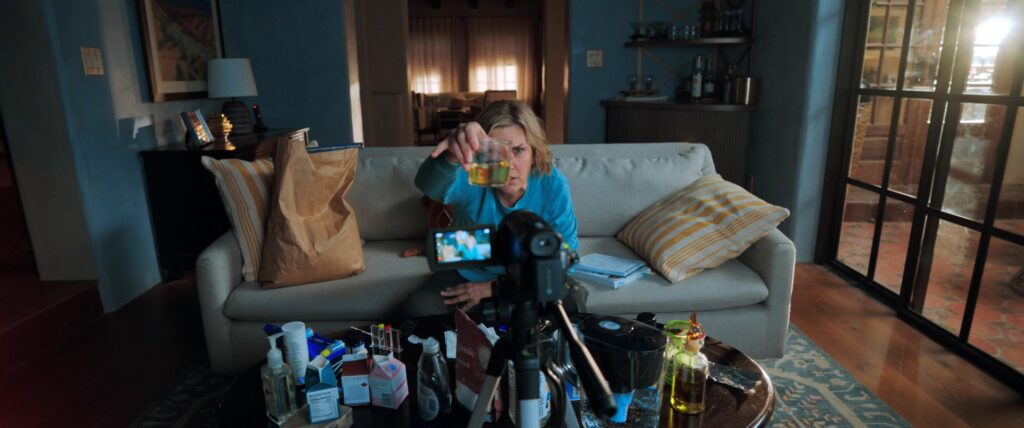
Carol, never dainty about method, scoops some powder, mixes it with water — which turns a viscous, odorless, amber liquid reminiscent of the “milk” from the cartons. She tests it (because of course she carries pH strips). The result? Basically neutral, tasteless, and very much not dairy.
The Investigation Spirals
Determined to share her findings with anyone who might listen, Carol sits down in front of her battered Canon camera and records her appeal. “If there’s a way to reverse the Joining,” she says, “it starts here.” She outlines her milk-sleuthing. She dares the elusive other immunes to test what their hives are drinking.
- She gets no response. Not a word from Manousos in Paraguay. Not a peep from Laxmi in India. The Others’ network is suddenly, maddeningly silent (decider.com).
So, left to her own devices, Carol does what she’s best at — she obsesses over details everyone else ignores. She notices, almost by accident, a barcode on the powder’s packaging. It doesn’t scan at the supermarket. She keeps digging.
Nearby on a pet food aisle, she recognizes a near-identical bag. This one is stamped AGRI-JET. It’s sold as pet food, not human food, but it’s coming from the same region, the same distributor, the same — wait for it — physical address as the milk plant (fandomwire.com).
So, what appears to feed pets also (maybe?) feeds the Others.
Wolves, Grief, and a Very Heavy Headstone
Carol’s existential horror doesn’t pause for long. The wolves return, digging at the place where Helen — her late partner, buried in the garden in a heartbreaking scene earlier this season — lies. She panics. She’s already lost her community and her mind a couple of times this week. There’s no way she’s losing Helen to coyotes.
- She tries yelling. No luck.
- She tries scaring with a club. Even less luck.
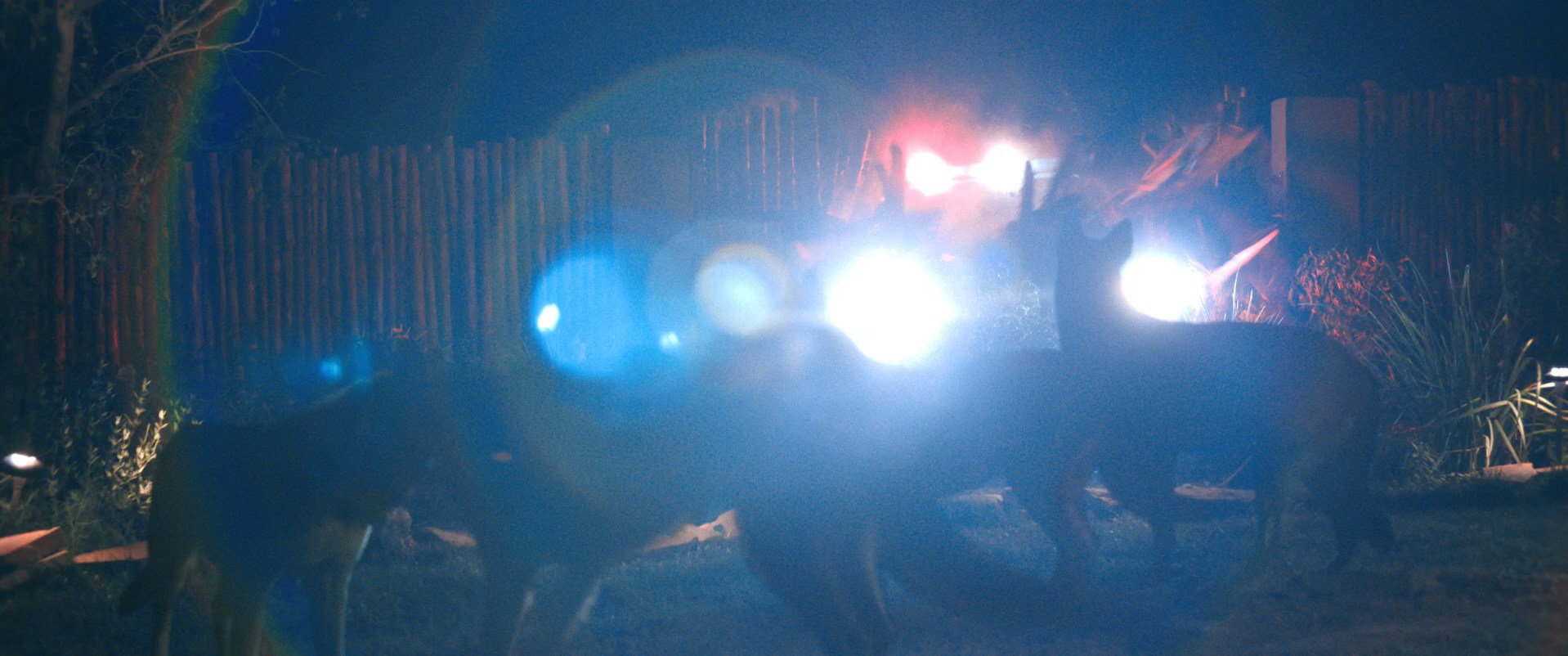
- Finally, straight out of a 1980s dark comedy, she commandeers a police cruiser (yes, a real one) and plows through her own fence, lights flashing, and chases the animals away (reelmockery.com).
Exhausted, she falls asleep behind the wheel. The next morning, she makes a new plan. Lugging heavy pavers from the hardware store, she builds a proper stone shield over Helen’s grave, complete with a hand-painted headstone. Her grief — uncomfortable, heavy, raw — sits starkly in the episode, grounded and real, surrounded by all this speculative weirdness.
The Trail to AGRI-JET: Isn’t This Just Pet Food?
But there’s more. The milk isn’t enough. Carol’s nosy by design and happens to knock over the bag at home. She reads the full manufacturer details — AGRI-JET Cold Storage.
The flow chart in her head sharpens:
- Duke City Dairy → odd powder → pet food bag → AGRI-JET cold storage warehouse (forbes.com).
She follows clues, instincts, and a couple of Google searches to a nondescript warehouse on the outskirts of town.
What’s Under the Plastic?
Inside, she doesn’t find some tidy, explainable secret. Instead, she sees:
- A gigantic cold room filled with fruit, vegetables, perishable food, and, chillingly, tarped pallets.
- Carol, sweating in the numbing freezer, works the cover off one massive stack.
At first, her face scrunches in confusion. Then, her eyes widen in shock. And as the camera slowly closes in, horror swallows her whole. We don’t get a shot of what she’s seeing. Not a hint. We just know whatever’s beneath that tarp, it’s not something that fits with vegan, nonviolent, utopian hive philosophy.
Immediately, the internet screams Soylent Green. Pluribus cleverly never confirms or denies that theory. But whether it’s human remains, failed Others, or something even more grotesque, Carol’s revulsion says it all (decider.com).
Patrick Fabian and the Darkly Comic Breakup Message
It’s worth noting again — because it brings such strange flavor — the use of Patrick Fabian’s voice for those hive “customer service” messages. Beyond the Better Call Saul nod, these gentle, corporate-style recordings twist the knife. Every word tells Carol she’s not a threat, just an embarrassment. They still “care,” just over there, never here. Each message underscores the hive’s weird flavor of collective emotional management — sometimes warmth, sometimes blackmail, sometimes just “no, thanks” in perfectly modulated tones (decider.com).
Brilliant Solitude: Rhea Seehorn Owns the Hour
Critics immediately flagged episode 5 as a tour-de-force for Rhea Seehorn. Watching her carry nearly every scene — no co-stars, just wolves, trash bags, and crows — is worth the price of admission alone (thedailybeast.com).
Her energy ranges wild:
- Bruxism when dealing with the drones’ failures.
- Quiet heartbreak at Helen’s grave.
- Bristling, petty irritation on her walkie-talkie to the other eleven non-joined.
- And utter, animal shock in the last minute’s deep freeze.
It’s strange, and raw, and makes every shot feel lived-in.
Where We Stand When the Milk Sours
At the risk of gushing, “Got Milk” elevates Pluribus from stylish sci-fi to something darker and more pointed. The show isn’t just about alien invasion or sudden utopias. Instead, it’s about the grungy realities hiding behind both — bodies, food chains, trash, and the invisible costs of someone else’s “happy ending.”
Some things the episode leaves freshly, uncomfortably open:
- What’s really in those cartons?
- What happens to humans who die in the hive’s domain?
- Does the hive’s pacifist doctrine extend to the table, or are there cracks?
- How much more can Carol learn before the hive locks her out for good?
Fans can’t stop speculating — Reddit already overflows with wildfire theories about what was under the tarp, what role the “milk” plays, and whether Carol’s loneliness might yet become her power.
As “Got Milk” ends, the show feels less like a family drama hiding inside a big-idea premise, and more like a cosmic detective noir gone rotten. Carol sits, possibly more alone than ever, holding truths so big and so horrifying she can barely get her mouth to speak.
Milk, it turns out, really does not do a body good — at least not here, not now, not when universes crack open and the hive starts quietly, finally, eating its own.