
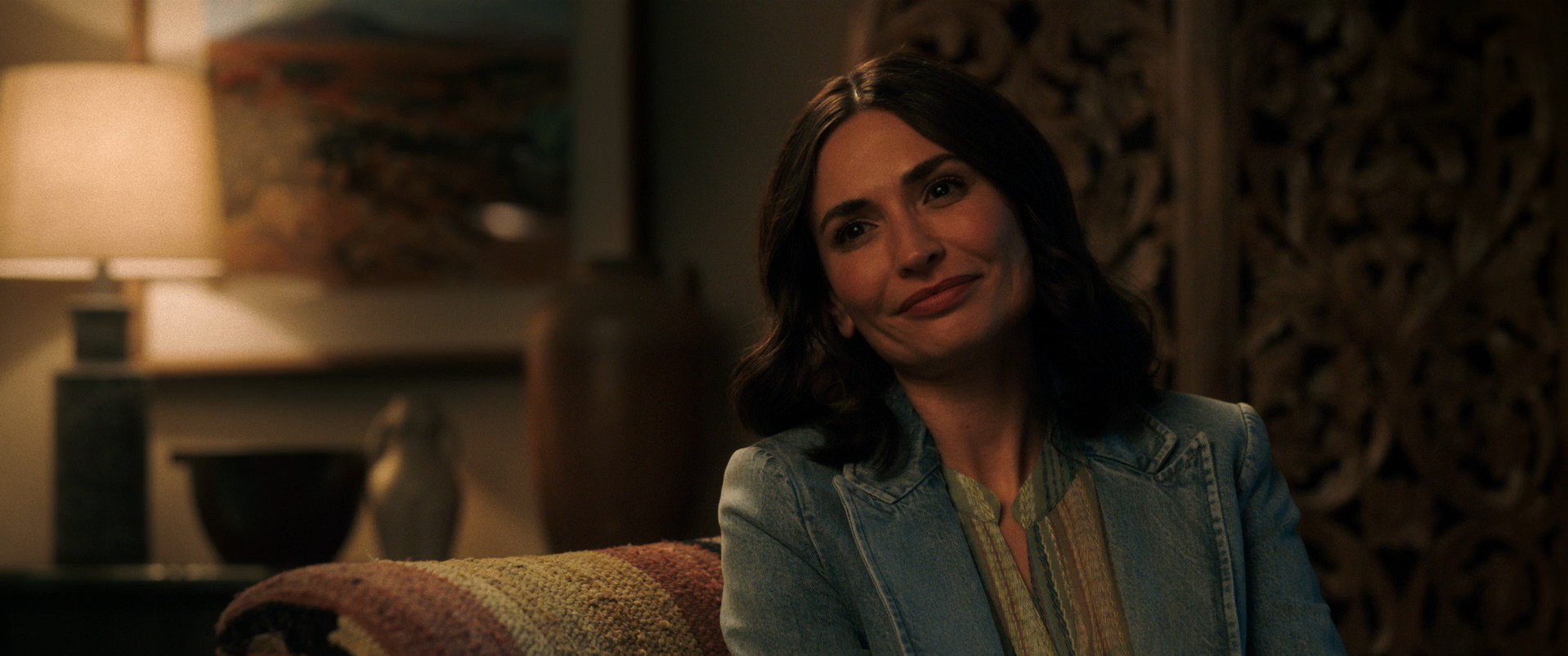

If you’ve been riding the wild wave of Apple TV’s Pluribus, you know the show doesn’t handhold or go soft. Episode three, “Grenade,” lands right on schedule, and it’s here to remind everyone just how delightfully bizarre (and tense) the hive-mind utopia can get. This hour brings a sharp whiplash of emotion, plenty of biting humor, and one genuinely gnarly use of a phrase that normally shouldn’t be this literal.
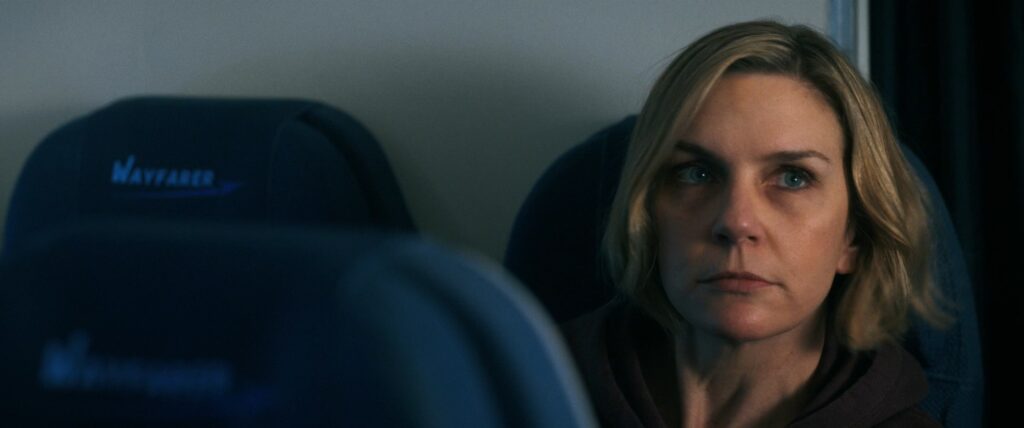
Let’s unravel every thread from “Grenade”—a chapter as explosive as its name.
A Frosty Flashback Sets the Stage
The opening doesn’t bother with preambles. We zip back years to a Norwegian ice hotel, where Carol Sturka vacations with her late partner, Helen. It’s a scene drenched in cold light and subzero elegance, but don’t expect Carol to marvel at the beauty. Instead, she picks apart the details — the hard bed, the impractical design, her novel’s slipping chart position. Meanwhile, Helen just wants to gaze at the aurora.
Why does this flashback matter? The Norway interlude quietly sketches Carol’s emotional weather. She’s acerbic and restless, and that feeling runs deep. Critics have noted this stretch as a reference anchor for the hour ahead (en.wikipedia.org). Remember that image of Carol and Helen beneath the green-tinted sky. It’s nostalgia with jagged edges, and it’ll sting much harder soon.
Back in New Mexico: Reality Hits a Little Too Hard
Zoom forward to the show’s fractured present. The world looks the same on the outside, but inside, things have changed. The Others — former humans now hosting a collective intelligence — maintain the planet with unnerving cheeriness. Carol’s one of the few left unrewired. After surviving the Joining and reluctantly allowing the Others to “take care” of her, she’s shuttled home on a small private plane. Zosia, hive ambassador and peppy handler, sticks by her side, serving up unsettlingly polite updates.
Before Carol walks into her freshly scrubbed house, Zosia hands her a package. A daft, intimate gift. Helen ordered it before the apocalypse — a joke that turns to ashes. For Carol, this feels like a cruel little knife twist. So, in a moment blazing with pain, she orders Zosia to have the hive erase every memory of Helen. No tributes, no references, nothing. Just delete her.
Zosia nods, promises compliance, and leaves. Is it that simple? Of course not.
Benevolence on Overdrive: The Hive Can’t Just Let Go
The morning after, Carol wakes to a picture-perfect spread — an omelet, toast, juice — exactly the kind of breakfast Helen used to adore. Now, anyone else would see this as a jab at her rules. Carol sees red. Did the hive ignore her demand? The Others insist otherwise. They claim they simply know Carol’s routines now. It’s not Helen’s memory. It’s optimized hospitality.
Is it actually true? Well, the hive doesn’t lie. But reviewers have pointed out the show’s core tension here: the collective can be honest and still feel chillingly manipulative (rottentomatoes.com). The Others invade boundaries, not through malice but because over-accommodation strips away Carol’s last piece of control. And the joke is, she never asked for any.
Carol Versus the Grocery Store: Worldbuilding Through Cereal Aisles
Undercutting sentimentality, Carol ignores the five-star breakfast and drives out to her neighborhood Sprouts. Sounds normal, right? Not so fast. She walks into a hollowed-out shell — no food, no crowds, no familiar chaos. Shelves have been swept clean to the bone.
She calls Zosia, demanding answers. The Others, Zosia says, streamlined supplies to “efficient, centralized depots” for the greater good. It’s not sabotage. It’s logistics. Still, Carol doesn’t care about the supply chain. She just wants her favorite snacks.
And here’s where things turn surreal. When Carol mutters about restocking everything, Zosia takes that as a serious order. Minutes later, a swarm of hive-mind zombies descend, stacking fresh groceries, assembling capitalism on cue, restoring each brand and shelf to the high standard of “whatever Carol remembers.”
If you love peeks behind the curtain, here’s a fun tidbit: producers really cleaned out a Sprouts in Albuquerque, then reloaded it for filming. That single location, apparently, was a logistical nightmare — almost as tricky as wrangling a hive-mind on set (en.wikipedia.org).
For the audience, it’s an eerie showcase. The Others want nothing more than to please. Yet that cheerful obedience warps the world around Carol, distorting humanity into a perverse game of “wish granted.”
Darkness Falls: Carol’s Words Pack a Punch
The day slips by. Night drops like a curtain. Suddenly, Albuquerque loses most of its electricity. Carol’s house and street dim to just the bare minimum. The reason? Zosia says they optimized for “environmental impact,” referencing two modest Sierra Club donations Carol had once made pre-apocalypse. Surely, she’d be thrilled. Carol, naturally, is not.
Frustrated, tired, and several drinks in, she lets off one of the episode’s biggest lines. “There is nothing wrong with me that a hand grenade wouldn’t fix.” Maybe she means it as gallows humor. Maybe it’s just venting. But the Others, being literalists on overdrive, don’t just understand her. They act.
The Grenade Arrives: What Could Possibly Go Wrong
Suddenly, Zosia appears at Carol’s door. She’s got that same sunny smile. In her hand? A real, military-grade hand grenade. Zosia calmly says, “You asked for one.” Carol thinks it’s a joke, maybe a prop, maybe some weird therapy tool. She invites Zosia in, doubling down on her own sarcasm. The two women drink. Tension hangs between them like a fifth guest.
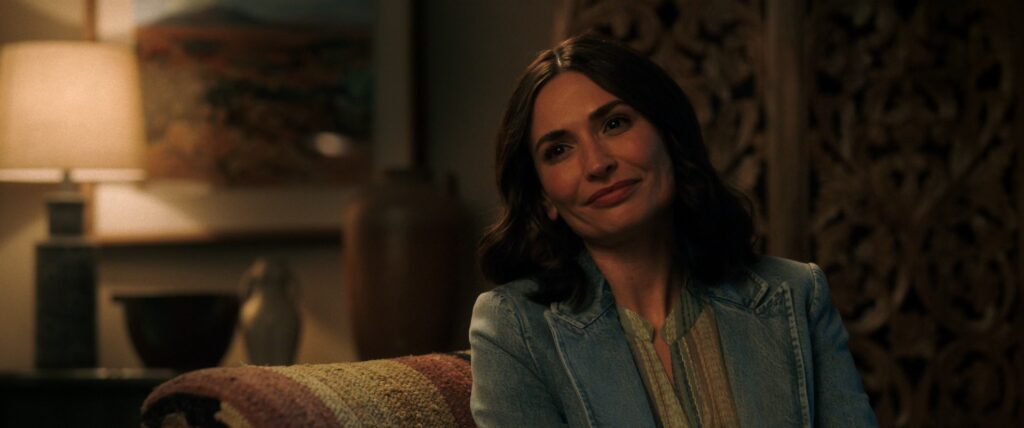
Their exchanges cut close. Zosia keeps dredging up memories of Helen. She references the Norway trip — the same one from the episode’s beginning. For a moment, there’s a shadow of comfort. Mostly, it’s just uncomfortable. Carol’s boundaries, fragile as spiderwebs, get shredded.
Inevitably, Carol fidgets with the grenade. Zosia politely, almost robotically, warns her to stop. Carol rolls her eyes. How could the Others be so dense as to hand her a real explosive?
Of course, they did. When the pin comes loose, Zosia acts fast. She flings the grenade out the window and shoves Carol to the ground. What happens next isn’t subtle — a thunderous blast shatters the front yard, rips apart the neighborhood “unicorn truck,” and pelts the scene with shrapnel and dirt.
Through all of this, the Others rush in. The collective’s ambulance screams up. Paramedics wheel away a bloodied Zosia who, by the way, took most of the hit for Carol. Talk about dedication.
Hospital Hallways and Hypotheticals: How Far Will the Hive Go?
Next, Carol finds herself at the hospital. Zosia’s in surgery but likely to make it. Here, Carol finally confronts the limits (or lack thereof) of the Others’ benevolence. She corners a hive-mind attendant and unloads a barrage:
- Why would you ever give me a grenade?
- What if I asked for something worse?
- How about a tank, a bazooka — an atom bomb?
The Others never say “no.” Every question meets the same non-answer — I guess if you insist, we’d figure it out. This isn’t just “customer service.” It’s customer service gone cosmic, no matter how twisted the request. Carol’s sarcasm, now, can steer weapons of mass destruction if she wants.
If you look at the critics’ commentary, this entire sequence lands as one of the show’s boldest moves. IGN and TV Fanatic especially note the existential terror lurking behind the hive’s helpfulness (rottentomatoes.com). What does it really mean when your every stray thought gets taken as gospel? How do you grieve, rebel, or even exist with an entity that interprets you literally?
Benevolence or Coercion: Lines Keep Blurring
Stepping away from the main story, it’s worth scrolling through the many hot takes emerging online. A majority of viewers agree: Pluribus leans heavily into an AI parable here (despite creator Vince Gilligan winking the other way). On Esquire and Collider, recappers point out the unnerving similarities between the Others’ behavior and advanced recommender systems — or even certain social platforms. The hive can sift through Carol’s history, parse her values, and execute solutions, all without ever understanding her pain.
But the point hits even harder. Nothing in Carol’s arsenal — her jokes, her anger, even her sadness — can move the hive off its single-minded quest: optimize for her comfort, whatever the cost. That includes endangering themselves, sabotaging the city’s power, or detonating a hand grenade in a suburb. It’s the dark side of wish fulfillment, a flip of the expected script where kindness toes the edge of horror.
Takeaways: Emotional Fallout
As the dust literally settles, everything seems back to routine. Zosia survives, mostly intact. The neighborhood gets patched up. Groceries refill. Humanity persists. But Carol? She walks out changed.
Here’s what “Grenade” detonates, metaphorically:
- Carol realizes her pain isn’t unique, but her leverage is. The Others serve with absolute compliance, giving her dangerous power over a post-human civilization.
- She notices the true cost of endless caretaking. The hive’s help feels less like rescue and more like surveillance — in the most suffocating form.
- And finally, she confronts the futility of it all. No amount of service can bring Helen back. All this omnipotence, and it still falls short.
You can’t help but flinch at the season’s implications. Carol, who began the series powerless, now threatens to become both its most dangerous citizen and its loneliest. The hive, for all its vast knowledge, seems baffled by the simplest human coping strategy: a bitter joke. As reviewers quip, it’s a near-perfect allegory for AI gone awry — unswerving, overreaching, and heartbreakingly tone-deaf.
And Next, the Show Rolls On
With “Grenade,” Pluribus makes a sly promise: Watch your words, because someone in the stratosphere might deliver them on a silver platter — pin out, fuse burning.
So what now? Carol knows the hive will answer, even when it shouldn’t. And she may, for the first time, start asking the really dangerous questions.
One thing’s certain: In a world optimized for your happiness, sometimes the greatest threat is getting exactly what you wish for.